Know Your Body Type: 4 Common Posture Types at a Glance
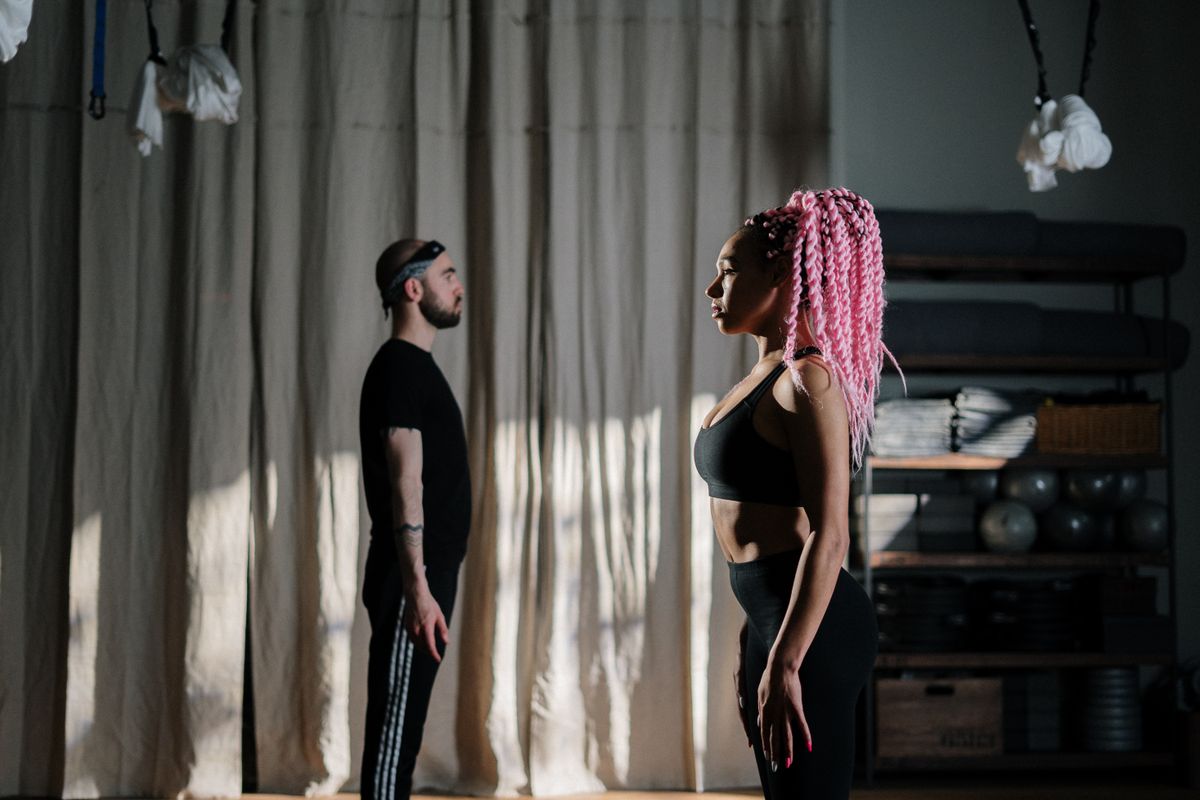
Image: Pexels (free license)
Ever caught a side-profile photo of yourself and thought, "Wait, why am I standing like that?" One person's upper back curls forward, another's belly seems to push out, another stands ruler-straight. These aren't all just "bad posture" — they're different types. This article is a map: a quick tour of the four common posture types, with each one's deeper story pointed to its own guide.
Why thinking in "types" makes it easier
Posture, in the end, comes down to one thing: viewed from the side, how close do your ear, shoulder, hip, and ankle bone come to a single line? Where and in which direction that alignment breaks down changes how the body looks. Once you know your type, the direction of "what to release" and "what to wake up" snaps into focus — far more efficient than following a routine blindly.
1. Kyphosis — the rounded-back type
The upper back rounds excessively, the shoulders roll inward, and the head drifts forward. This is the most common pattern in a world of desks and smartphones. What people call forward-head and rounded shoulders is the upper half of this pattern. The key picture: the front of the chest shortens while the muscles of the upper back grow weak.
→ Go deeper: Forward head and rounded shoulders: self-check and the principle behind fixing it · for shoulder symptoms, Chronic shoulder tension: causes and self-care
2. Anterior pelvic tilt (lordosis) — deep lower-back curve, belly out
The pelvis tips forward, the lumbar curve deepens too much, and as a reaction the lower belly seems to push out. If your stomach looks prominent when it isn't a matter of body fat, this is worth suspecting. Typically the front of the hips and the lower back are short, while the glutes and deep core are weak.
→ Go deeper: Anterior pelvic tilt self-check: the real reason your belly looks like it's sticking out
3. Flat back — the ruler-straight type
Just as the name suggests, the natural curve of the lower spine disappears and the whole back flattens. "Straight is good, right?" Not quite — the spine's gentle S-curve works like a spring that absorbs impact. When it flattens out, fatigue builds quickly during long standing or walking, and the pelvis tends to lock in a slightly tucked-under position.
→ Go deeper: Understanding flat-back posture
4. Sway back — pelvis forward, upper body leaning back
From the side, the pelvis pushes forward past the feet while the upper body leans back, so the whole body looks as if it's slouched on a diagonal. It shows up easily in people who stand on one hip for long stretches or perch on the edge of a chair and lean back. It may look relaxed, but the muscles along the back of the body and the core aren't really working — the body is hanging on its ligaments to hold the line, which is quietly taxing.
→ Go deeper: Sway-back posture: causes and care
So what's the shared principle?
All four types reduce to a single sentence — release what has shortened, wake up what has weakened. But which parts are short and which are weak can be exactly opposite from type to type, so the same stretch can be medicine for one person and poison for another. There's a separate article that lays out this principle properly; read it once and everything else gets easier.
→ Read the principle: Release the tight, strengthen the weak — the basic principle of fixing muscle imbalance
- Stand naturally with your back against a wall.
- Check whether the back of your head, shoulders, and hips touch the wall, and how big the gap behind your lower back is.
- Take a side-profile photo and see whether your ear, shoulder, and hip fall close to one line.
This is only a reference to point you in a direction. If you want to know your type faster and more accurately, it's worth running a quick self-check.
Find your closest body type in one minute
PilaMate's free posture self-check uses a few questions to identify your closest posture type, and points you toward what to release and what to strengthen.
Take the free posture self-checkRead next: Forward head & rounded shoulders · Anterior pelvic tilt · Chronic shoulder tension