Flat Back — A Ruler-Straight Back and Flat Glutes
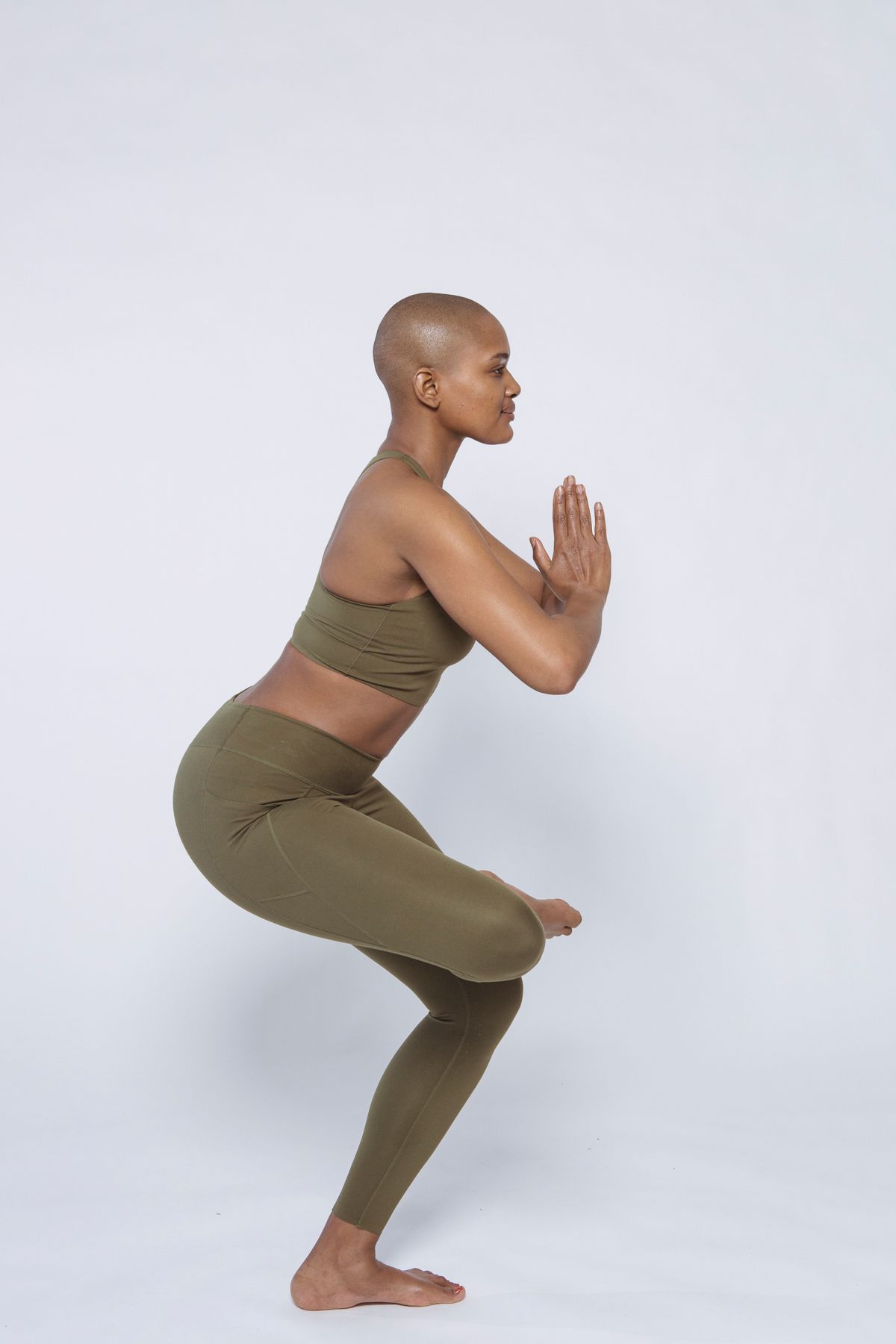
Image: Pexels (free license)
Your pants look flat across the seat, your back looks ruler-straight from the side — people even tell you "great posture" — yet you're the first one whose legs feel heavy after standing a while. If that combination sounds familiar, flat back is a real possibility. Straight isn't always good.
Why straight feels more tiring
Seen from the side, your spine is a gentle S. The neck curves forward, the upper back back, the low back forward again. That curve is what lets weight coming down from above disperse smoothly instead of slamming into one spot. Think of a car's suspension.
Flat back is when the lumbar curve in the middle of that S has been ironed out. The spring is gone, so the impact of standing and walking transmits straight through with no cushioning. That's why "my posture looks fine, so why am I tiring this fast?" happens. It's the classic type where appearance and the inside story don't match.
For reference, it's the exact opposite of an anterior pelvic tilt, where the pelvis tips forward and the low back scoops in too much. One curve is too deep, flat back's is too shallow. So the two types have what-to-release and what-to-wake reversed. Mistake your type and you can train in the wrong direction, so compare first.
→ Compare the opposite type: Anterior Pelvic Tilt Self-Check · all four at a glance: The 4 Posture Types
One-minute self-check
- Stand comfortably with your back and glutes against the wall.
- Slide a hand into the gap between your low back and the wall.
- Normally a flat hand fits snugly. If your hand barely fits because the low back is pressed flat against the wall, that can be a flat-back tendency with a reduced curve.
- If a side photo shows flat glutes and the top of the pelvis tucked under, check it alongside.
Why it sets in
Long hours of sitting are a common cause. Sit long enough with your back rounded and your pelvis rolled back, and the body learns that "sitting on your tailbone" stance as default. In that position the muscles that set the pelvis to neutral barely work, so even when you stand the lumbar curve doesn't return — it stays flat and stiffens that way. Over-cinching the abs or constantly tucking the tailbone also pushes the curve flat.
The direction to fix it
The key word is "restore" the curve. This isn't about cranking your back into an arch — it's about returning the tucked-under pelvis to neutral first. Once the pelvis stacks where it belongs, the lumbar curve follows naturally.
Here's why the core matters so much: even if you reclaim the curve, without a center to hold it, it collapses again fast. The piece on why the core is the foundation of every posture makes it clear why building the curve alone isn't enough.
→ Related: The Real Reason Core Training Matters for Your Health
Find your closest body type in a minute
PilaMate's free body-type self-check uses a few questions to flag the posture type closest to you, and points you toward what to release and what to wake.
Try the free body-type self-checkRelated: The 4 Posture Types · Anterior Pelvic Tilt · Why the Core Matters