Anterior Pelvic Tilt Self-Check: The Real Reason Your Belly Sticks Out
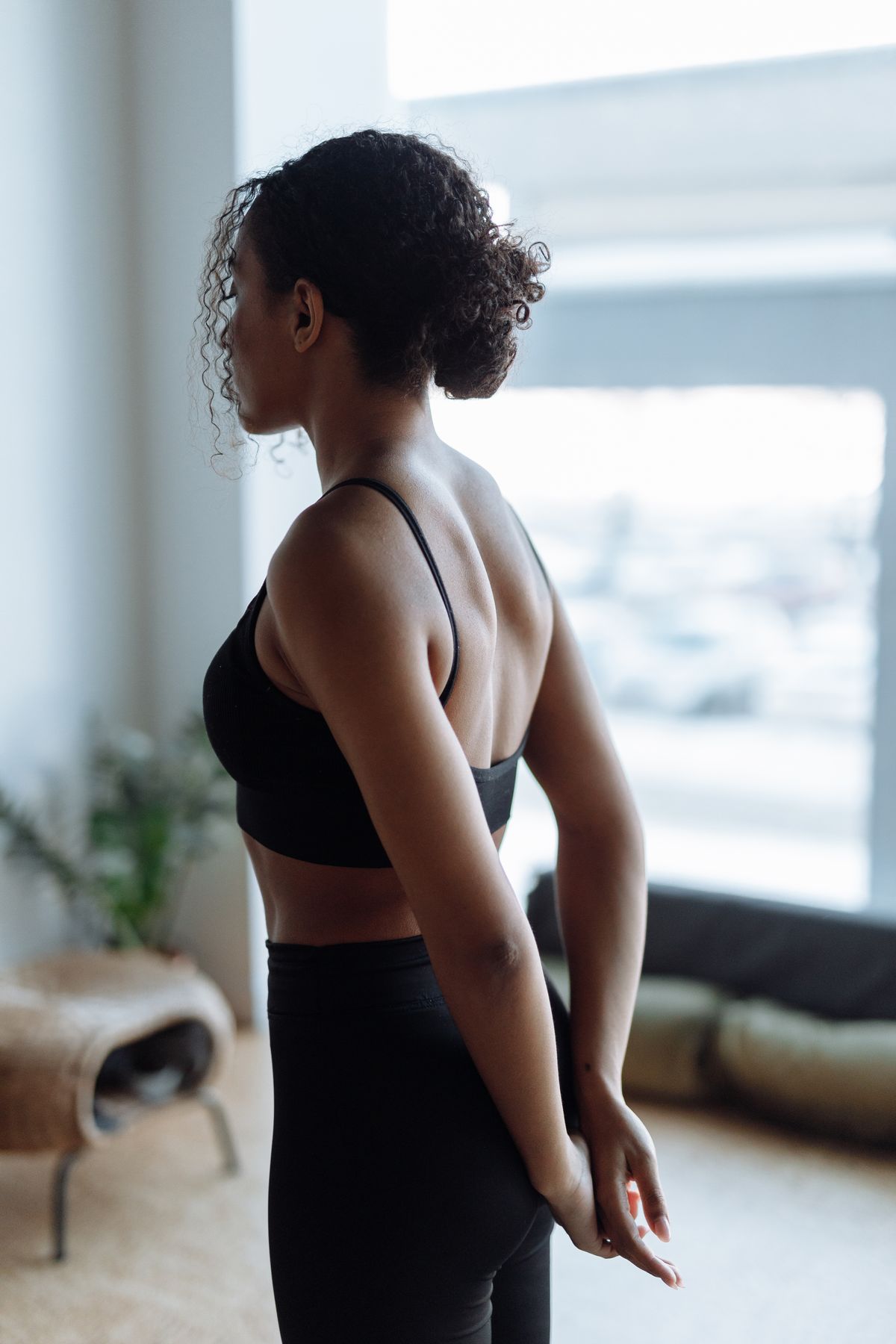
Image: Pexels (free license)
Some people clearly haven't gained much weight, yet from the side their lower belly pokes out — and dieting never quite fixes it. The reason might not be body fat at all, but the tilt of the pelvis. This is the story of anterior pelvic tilt.
What is anterior pelvic tilt?
It's a state where the pelvis tips forward. When the pelvis spills forward like that, the lower back arches in sharply, and as a reaction the lower belly and the seat push back out, making the belly look like it sticks out. Medically it's also called lordosis. It's genuinely common in people who sit and work for long hours.
A 1-minute self-check
- Stand comfortably with your back and seat against a wall.
- Try slipping a hand into the gap between your lower back and the wall.
- If your palm fits snugly, that's a normal range. If the gap is loose — big enough to fit a fist — you may have a tendency toward anterior pelvic tilt.
Taking a side-profile photo helps too. If your lower-back curve looks unusually deep and the front of the pelvis appears tipped down, it's worth checking.
Why does this happen?
It's mostly a muscle imbalance. Sit for long enough and the hip flexors at the front and the lower-back muscles shorten, pulling the pelvis forward, while the glutes and deep core that should hold the pelvis from behind grow weak. The pulling side is strong and the holding side is weak, so the pelvis has no choice but to tip forward.
The direction for fixing it
The principle is simple: release what's short (front of hip, lower back) and strengthen what's weak (glutes, core). Once those two come back into balance, the pelvis returns toward neutral and the look of a sticking-out lower belly naturally eases as well.
Curious about an exercise flow matched to your body type?
Enter the body-type pattern and the goal, and PilaMate builds a safe sequence that reflects what to release and what to strengthen. A tool for instructors, launching soon.
Try the free posture self-checkRelated reading: The Real Reason Core Training Matters (It's Not the Six-Pack)