Sway Back Posture — Hips Forward, Chest Back
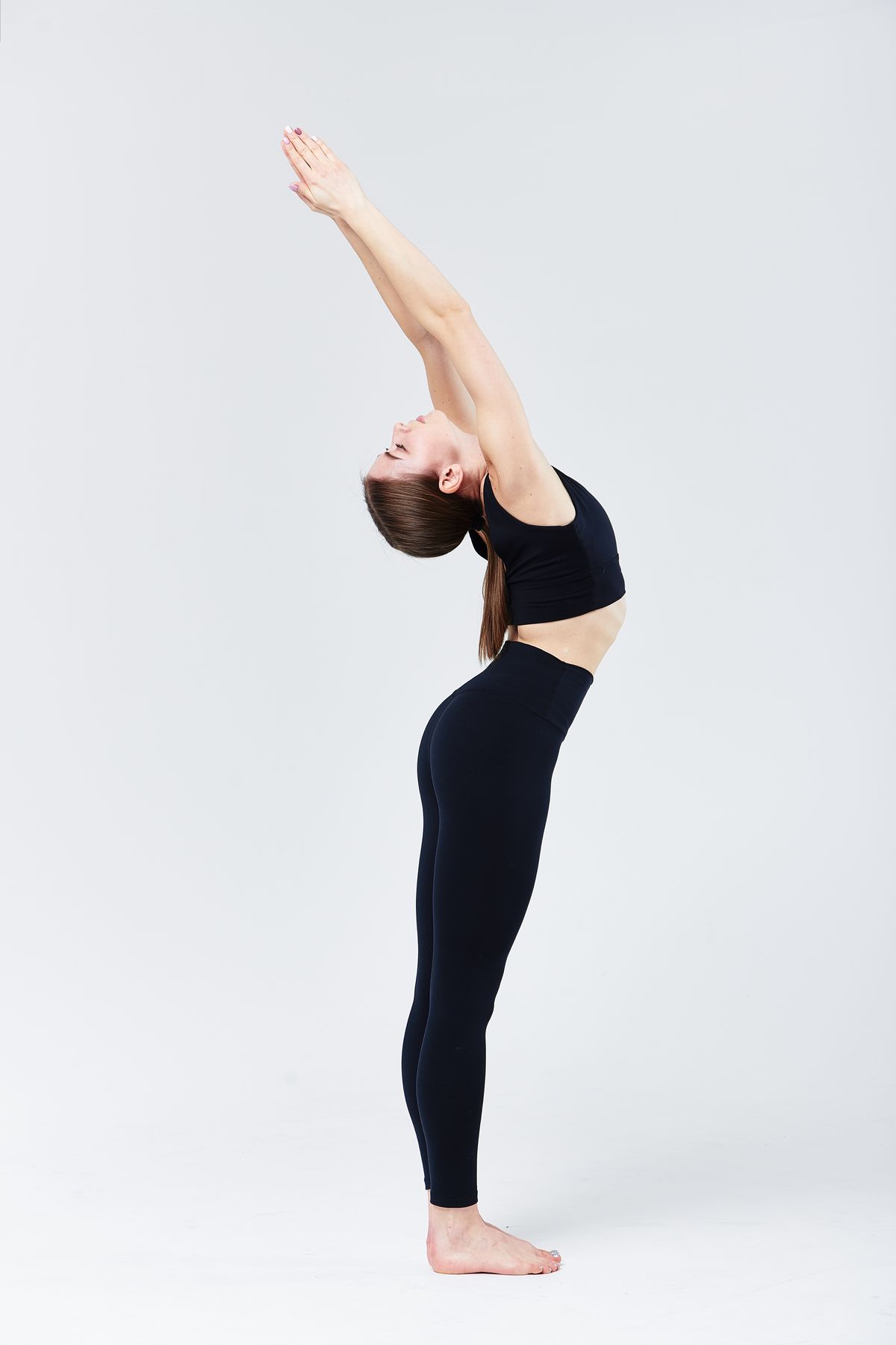
Image: Pexels (free license)
You've seen the person waiting for the train, weight dumped onto one leg, hips nudged forward, just hanging there. Maybe that person is you. There's a reason that stance feels oddly comfortable — the muscles have clocked out. That's sway back.
What sway back actually looks like
Picture the side view. In a neutral stance, the ear, shoulder, hip, and ankle bone sit roughly in one line. With sway back, that line zigzags. The hips jut forward past the reference line, and to counterbalance, the upper body (chest and shoulders) leans back. The overall silhouette looks like someone propping themselves up at a slant.
Here's an easy point of confusion. Hips pushing forward is not the same as an anterior pelvic tilt, where the low back scoops in. In fact, sway back tends to mix in a slightly tucked-under pelvis and a flattening of the upper lumbar region. They can look similar from the outside while doing different things inside. Our body-type hub lays out how the two diverge at a glance.
→ Compare the four types: Know Your Body — The 4 Posture Types at a Glance · if the low back scoops in: Anterior Pelvic Tilt Self-Check
One-minute self-check
- Stand against a wall the way you normally would. It matters that you don't pose — just stand naturally.
- Take a side photo. Are your hips (the beltline) noticeably forward of your ankle bone?
- And is the chest and shoulders leaning back, so the whole body forms a slanted "C"?
- If standing for a while leaves your low back quietly tired without any sense of your glutes working, that can be a signal.
Why it sets in
Mostly it's habit. Standing on one hip for long stretches, perching on the edge of a chair and leaning back into the backrest, carrying a child on one arm with the hips pushed forward to support the load. They all throw the pelvis forward and hang on ligaments instead of using muscle. It feels easier in the moment, but repeated enough, the body stores that stance as its default.
As a result the posterior chain — the glutes, hamstrings, and abdominals — gradually lets go. Not used, they weaken; weak, they get used even less. A loop that feeds itself.
The direction to fix it
The principle is the same as for any body type — release what's shortened, wake what's resting. Get that one principle right, the line between what's short and what's weak, and any body type becomes easy to adapt for; that foundation is covered in a separate piece.
Add one more thing on top: auditing how you stand. Waiting at a crosswalk, spread your weight evenly across both feet and give the glutes a light squeeze to set the pelvis over your feet. That small correction makes as much difference as the exercise itself. Forward head and rounded shoulders often ride along too, so reading the piece on aligning the upper body completes the picture.
→ The principle in depth: Release What's Tight, Strengthen What's Weak — The Basics of Fixing Muscle Imbalance
Find your closest body type in a minute
PilaMate's free body-type self-check uses a few questions to flag the posture type closest to you, and points you toward what to release and what to wake.
Try the free body-type self-checkRelated: The 4 Posture Types · Anterior Pelvic Tilt · Forward Head & Rounded Shoulders