Forward Head Posture & Rounded Shoulders: Self-Check and How to Fix It
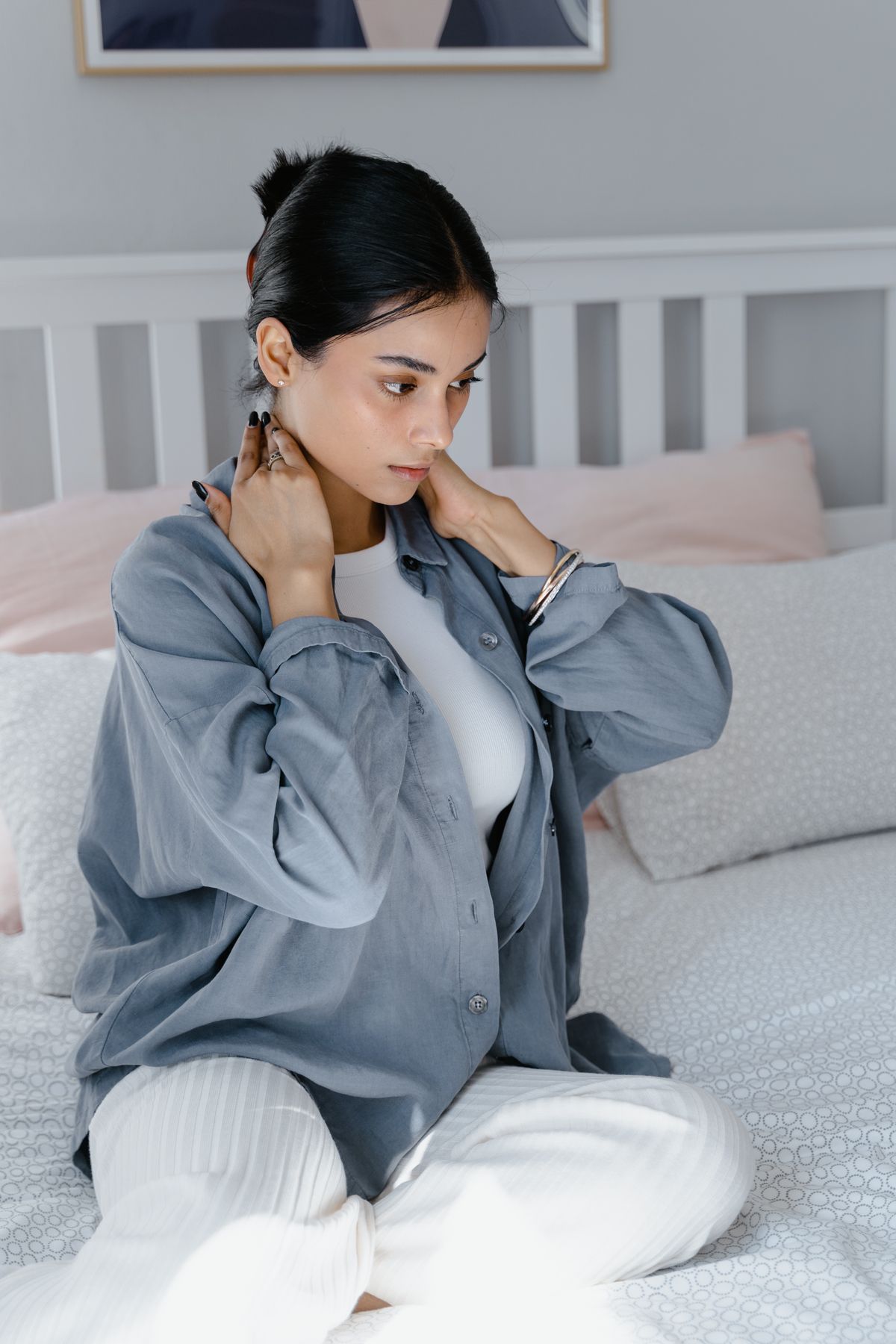
Image: Pexels (free license)
For anyone who stares at a monitor and a phone all day, forward head posture and rounded shoulders are almost an occupational hazard. This post covers why they happen, how to self-check at home, and the basic principles for improving them with exercise.
Why do forward head and rounded shoulders come as a pair?
A head that drifts forward — forward head posture — and shoulders that roll inward — rounded shoulders — usually appear together, a pattern called upper crossed syndrome. Sit and stare at a screen for long enough and the front of the chest (pectorals) and the front-of-neck muscles shorten, while the muscles across the upper back (mid and lower trapezius, rhomboids) and the deep neck flexors grow weak. Let that imbalance pile up and your posture slowly collapses forward.
A home self-check
- Stand naturally with your back against a wall.
- Does the back of your head rest easily on the wall? If your chin has to lift to reach it, that's a sign of forward head posture.
- If the backs of your hands face forward and your shoulders sit well off the wall, that points to rounded shoulders.
This test is just a reference, of course. If pain or tingling comes with it, professional assessment should come before any self-diagnosis.
The basic principle for fixing it
The core idea is simple: release what's short, strengthen what's weak.
- Release: the front of the chest (pectorals) and the muscles at the front of the neck and base of the skull — chest-opening and gentle mobility work.
- Strengthen: the scapular stabilizers across the back and the deep neck flexors — extension-focused work that draws the shoulders down and lengthens the upper back.
This is exactly why Pilates comes up so often for posture work. It handles scapular stabilization, spinal extension, and breath-driven core activation within a single flow, which makes it well suited to reversing this kind of imbalance in a structured way.
Sequences matched to your client's body type, automatically
Enter a body-type pattern like forward head or rounded shoulders along with the goal, and PilaMate builds a safe sequence that reflects what to release and what to strengthen. A tool for instructors, launching soon.
Try the free posture self-checkRelated reading: Why Your Shoulders Are Always Tight: Chronic Shoulder Tension · Why Sitting at a Desk Hurts Your Lower Back