Why Sitting at a Desk Hurts Your Lower Back (and How to Manage It)
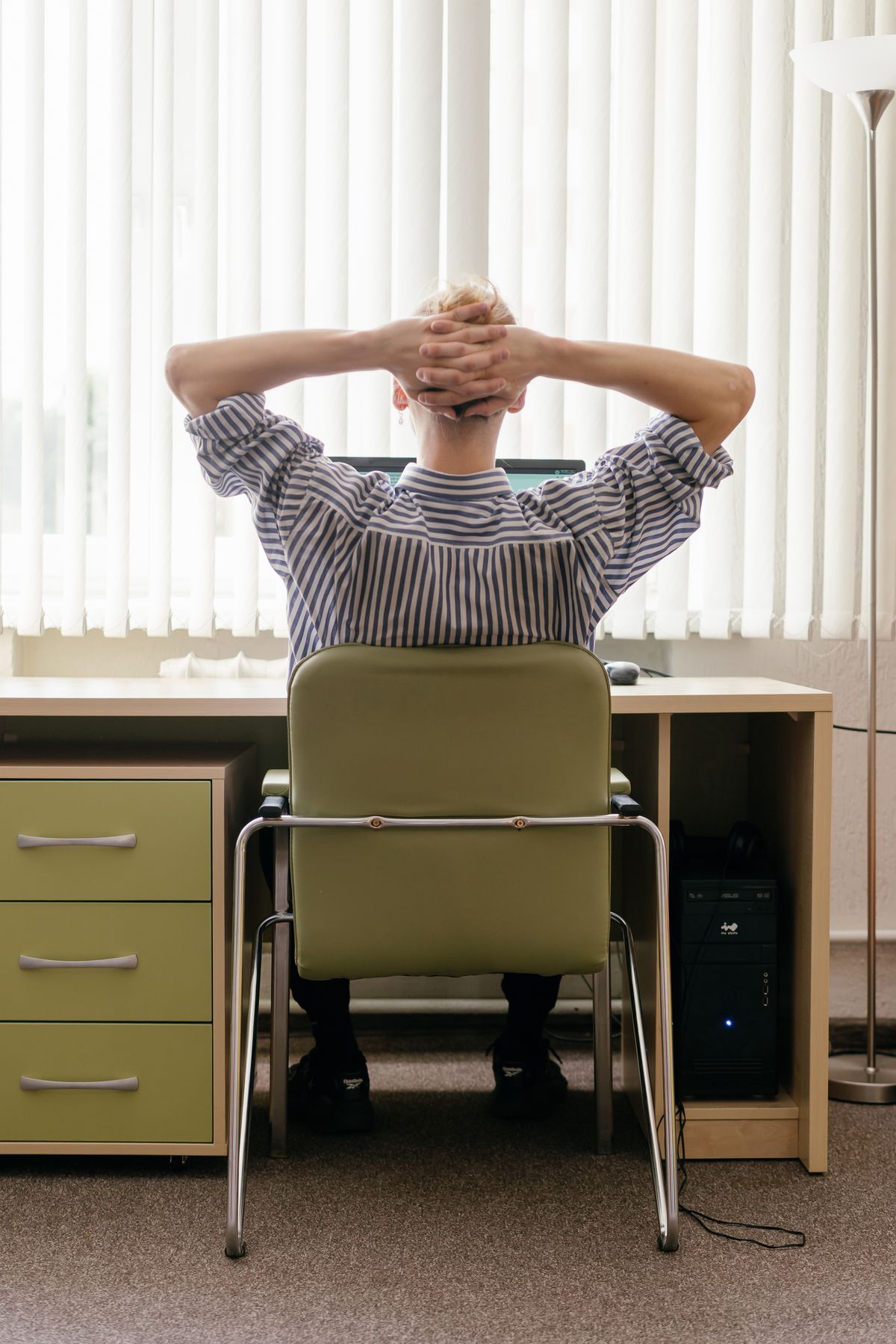
Image: Pexels (free license)
Around 3 p.m., does your lower back start feeling heavy in the chair, and you keep shifting to find a better position? Desk-related back pain isn't a sign of weak willpower — it's because our bodies aren't really built for the posture we call "sitting."
The surprising part: sitting loads the back more than standing
Plenty of people feel that standing is tiring and sitting is comfortable — but from your lower back's point of view, it's the opposite. Sitting puts more pressure on the lumbar discs than standing does. And when you round your back and lean toward the monitor, that load climbs higher still.
Two things stack on top of that. When you sit, the core muscles that should support your spine clock out, and at the same time the hip flexors at the front (the muscles that bend the hip) shorten. Those shortened front muscles pull on the pelvis, the lumbar curve shifts, and that tension shows up as pain.
So the real problem is "not moving," not "too long"
Your body hates being held in one position. In truth, even perfect posture gets uncomfortable after two unbroken hours — any posture does. That's why the key isn't buying an expensive chair, it's breaking it up often.
Self-care you can start today
- Get up every 30–40 minutes. Set an alarm if you have to. Even a minute of standing and walking releases a lot of disc pressure.
- Sit with a tall pelvis. Slide your hips deep into the chair and stack the pelvis upright instead of tucking the tailbone under.
- Release the shortened front. Gentle stretches that lengthen the front of the hip ease the pull on the pelvis.
- Wake the resting core. Getting the deep core that supports your spine back to work is the most important thing long term.
An exercise flow matched to your condition, automatically
Enter the goal and the body's condition, and PilaMate builds a safe exercise sequence to match. A tool for instructors, launching soon.
Try the free posture self-checkRelated reading: The Real Reason Core Training Matters (It's Not the Six-Pack)