Desk Worker Stretching: What Tightens When You Sit All Day
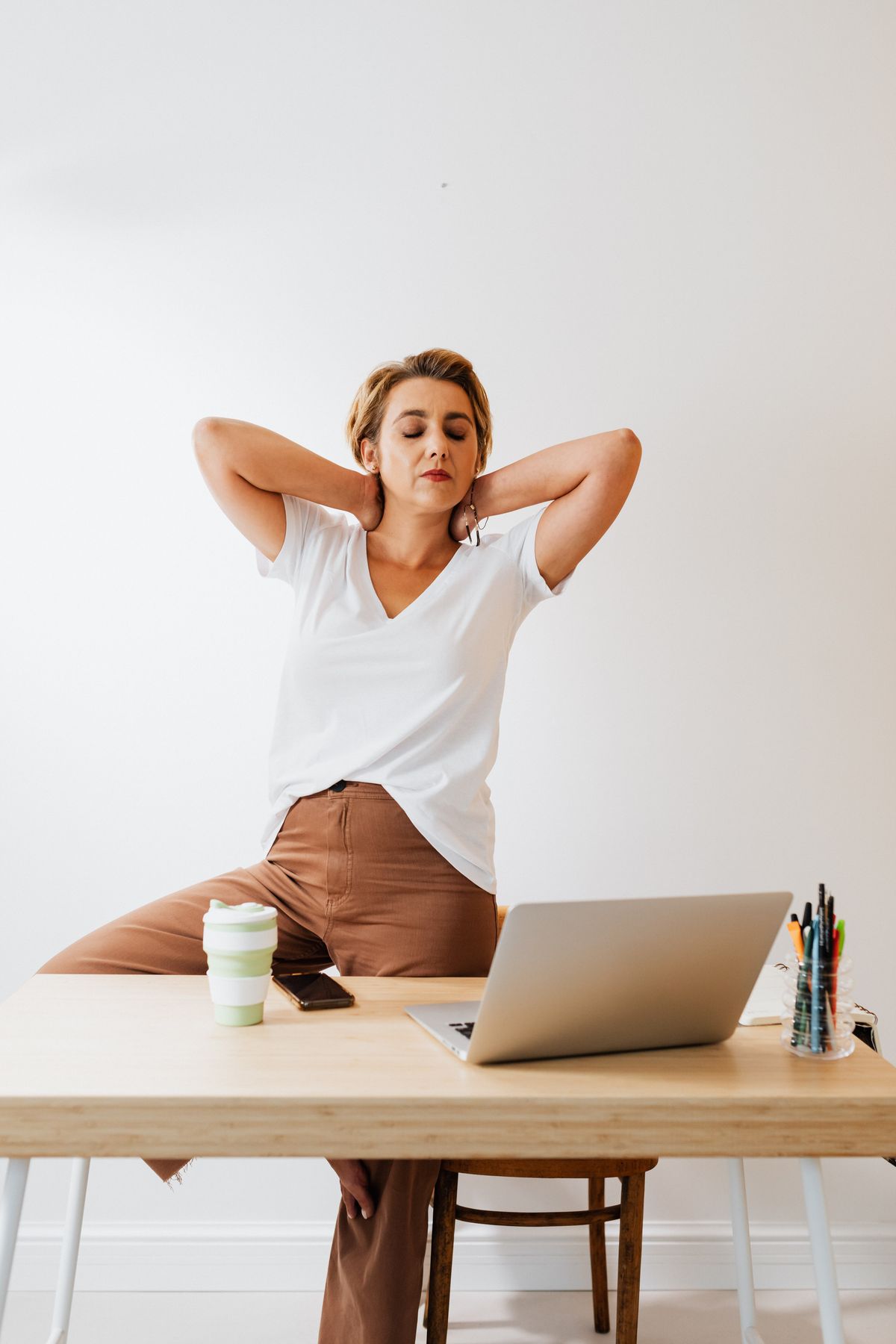
Image: Pexels (free license)
You spend eight hours a day in the same chair — and your body was never built to sit that long. So by the time you clock out, your neck is stiff, the front of your hips feels tight, and you think, "I really should stretch." But stretching just anywhere doesn't release it. Once you know where things tighten and where they weaken, the same five minutes can produce a very different result.
What shortens and what weakens when you sit too long
Freeze the seated position like a photo and the answer appears. The hips are folded, the back rounds, and the head drifts toward the screen. Repeat that posture every day and the body adapts to the shape. The folded side (front of the hips, front of the chest, back of the neck) shortens, and the lengthened side (the back, the glutes, the core) weakens. This principle of treating the tight and the weak separately is laid out in detail in the forward-head article; read it once and it applies to every region.
→ Read the principle: Release the tight, strengthen the weak — the basic principle of fixing muscle imbalance
Four key regions, seen this way
If neck, shoulder, or lower-back symptoms stand out, there are separate articles that dig deeper into each region. Here we only draw the "whole map" and leave the detailed prescription to each piece.
→ See more: Chronic shoulder tension: causes and self-care · Why sitting all day hurts your lower back, and how to self-manage it
Why stretching alone isn't enough
Lengthening a shortened muscle feels great in the moment. But if the weakened muscles still aren't doing their job, posture snaps right back. Releasing and waking are a pair. And honestly, the most powerful thing isn't an exercise at all — it's the habit of breaking things up often. Just standing up once every 30 to 40 minutes resets the body before it stiffens.
- Stand up and walk for one minute every 30 to 40 minutes — the single most effective thing.
- Gently lengthen what's shortened (front of the hips, front of the chest, back of the neck).
- Add light movement to wake what's weak (lower scapula, thoracic spine, core).
- Raise your monitor and sit with your pelvis stacked upright.
Where are you short, and where are you weak?
PilaMate's free posture self-check identifies your posture type and the direction of what to release and what to wake — in about a minute.
Take the free posture self-checkRead next: Why sitting at work hurts your lower back · Chronic shoulder tension · Forward head & rounded shoulders