Mat vs Reformer — What to Recommend by Client and Goal
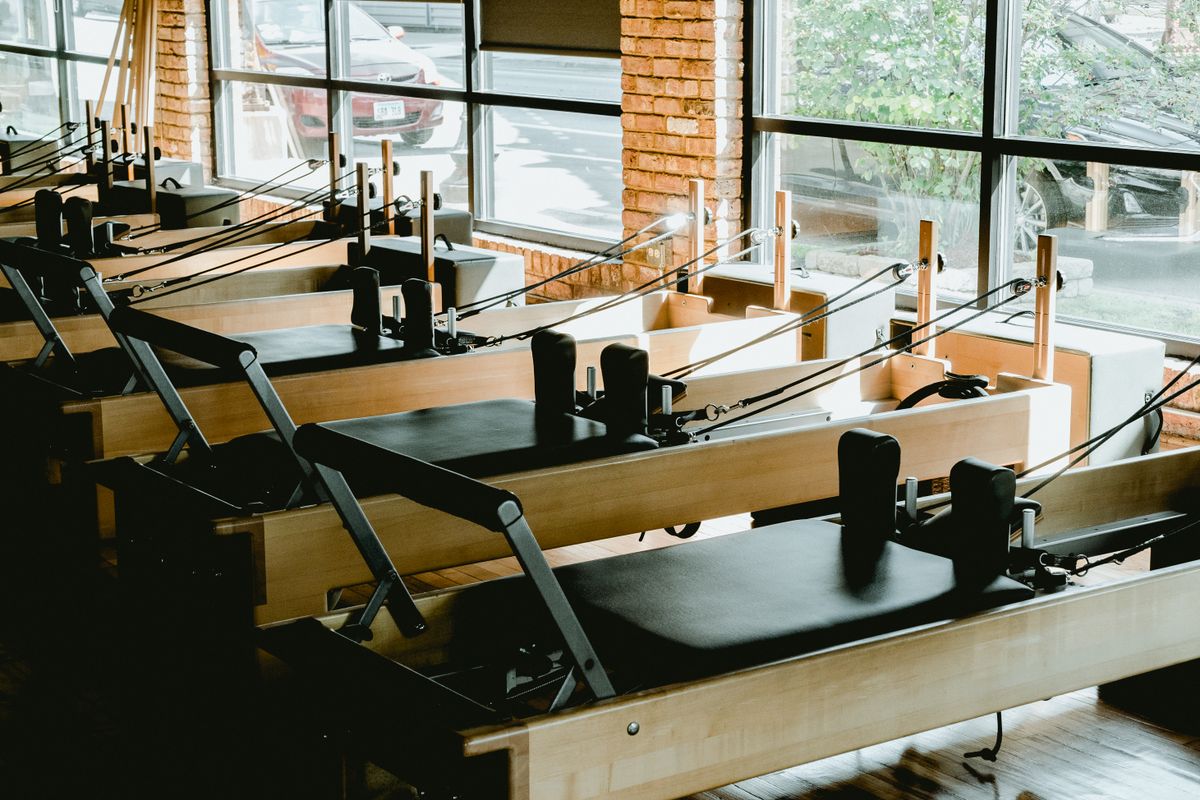
Image: Pexels (free license)
A prospective client at consultation asks, "So which is better — mat or reformer?" It's the question instructors field most, and also the most awkward to answer. "Both are good" sounds like a cop-out, and committing to one isn't right either. The truth is they aren't better-or-worse — they're different tools for different jobs.
The most fundamental difference: the source of resistance
On the surface, one is a mat on the floor and the other a spring-loaded bed-like machine. But the real difference isn't how the equipment looks — it's what the body is working against.
The mat is purely your own body and gravity. With no outside support, the core takes on the full job of holding and controlling each movement. The reformer, by contrast, can add resistance through spring tension or, the other way around, gently support a movement. The same exercise gets harder with heavier springs and easier with lighter ones. That ability to adjust resistance and assistance in both directions is the heart of the reformer.
What each does best
To add to that: because the reformer's springs guide the movement "onto rails," they stop beginners from pushing force in the wrong direction. So it's friendlier to clients learning alignment for the first time. The mat, without that guidance, is good for clients who already have some awareness and want to build stability under their own power. Neither is superior — it's a question of which stage the client is at right now.
So how do you recommend per client?
There's no fixed formula, but here are the rough lines instructors use in practice.
- If the goal leans toward posture correction or rehab-tone work — the reformer's assistance often helps a safe entry.
- If the goal is core stability and self-awareness — the mat stimulates that ability directly.
- If you want them to keep it up at home — mat needs no equipment, which helps habit-building.
- If you want fine control over intensity — reformer springs make stepping up and down easy.
In reality, rather than using one only, instructors often blend them — using the reformer to set alignment and awareness, then the mat to have the client reproduce that awareness under their own power. Either way, what matters in the end isn't the equipment but the flow you design with it. After choosing the exercises, the order you place them in is what decides the quality of the class.
→ The basics of designing flow: How to Sequence a Pilates Class — A 5-Step Framework
Whatever the tool, delivery comes down to cueing
One more thing. Mat or reformer, whether a client actually performs a movement well hinges heavily on the instructor's cueing. The reformer especially has more variables — spring tension, foot position — so the same move can land differently depending on how you guide it. Change the tool and the craft of delivery still has to come along.
→ Related: The Principles of Cueing Clients Actually Understand
Whatever the tool, flow design on autopilot
Enter the client type and goal, and PilaMate builds a matching sequence automatically. An instructor tool so you don't start from a blank page every time — launching soon.
Join the waitlistRelated: The 5-Step Sequencing Framework · The Principles of Cueing