How to Cue Pilates Well: Visual, Tactile & Verbal Cues
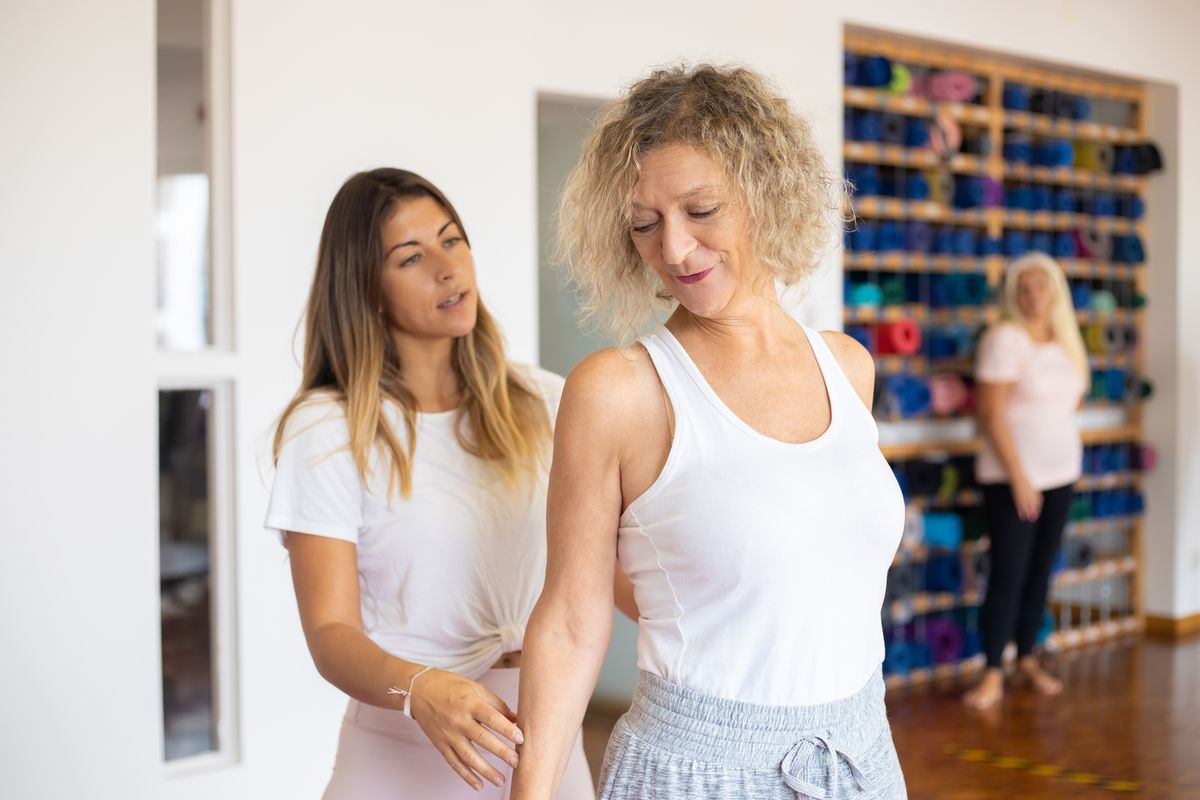
Image: Pexels (free license)
Same exercise, two instructors. One says a single sentence and the client's form clicks into place. The other explains three sentences and the client is still puzzled. It isn't that one knows more exercises. The difference comes down, almost entirely, to cueing. An instructor's real skill shows less in the hands that build the sequence and more in the voice and hands that transfer it into the client's body.
First, what cueing actually is
A cue is the signal an instructor throws so the client finds the key sensation of a movement. It isn't narrating the posture from start to finish — it's pointing to the single most important thing in this exact moment. A good cue draws an accurate image in the client's mind, and that image converts straight into movement.
Three cues, and how they differ
You lightly touch the client's scapula or pelvis to tell the body "use here." It's the most powerful cue but the one to handle with the most care. Always get consent first, keep it light and clear, and pair it with words that name your intent — like "I'm going to guide your shoulder down, toward this contact."
The key is switching senses: if a verbal cue doesn't land in a movement, switch to visual; if it still won't click, finish with tactile. Every client absorbs a different sense best.
A few examples of good cues
- The Hundred — "short and quick, like your arms are bouncing off the floor." (image of speed)
- Roll-Up — "peel your spine off the mat one bone at a time, like unstringing a pearl necklace." (image of articulation)
- Bridge — "press the floor away with your feet and lift from the hips toward the ceiling." (defining the start point)
See the common thread? Instead of making clients memorize muscle names, you hand them a picture they can call up and feel immediately.
Cueing mistakes new instructors make
- Too much at once. "Ribs down, shoulders down, neutral pelvis, and the breath is…" — dump it all and the client catches nothing. One key point only.
- Term overload. "Activate your transverse abdominis" is a foreign language to a client. Translate it into words they can feel.
- Only pointing out what's wrong. "This way, let's try" beats "that's not it" — faster, and it feels better.
- Repeating the same cue. Instead of repeating a cue that isn't working, only louder, switch senses.
Sequences and cue points, automatically
Enter body type, goal, and class length, and PilaMate builds the sequence — and suggests the key cue point for each movement. A tool built for instructors, launching soon.
Join the waitlistRead next: How to sequence a Pilates class: a 5-step framework for new instructors · How to cut your weekly class-prep time