How to Sequence a Pilates Class: A Simple 5-Step Framework
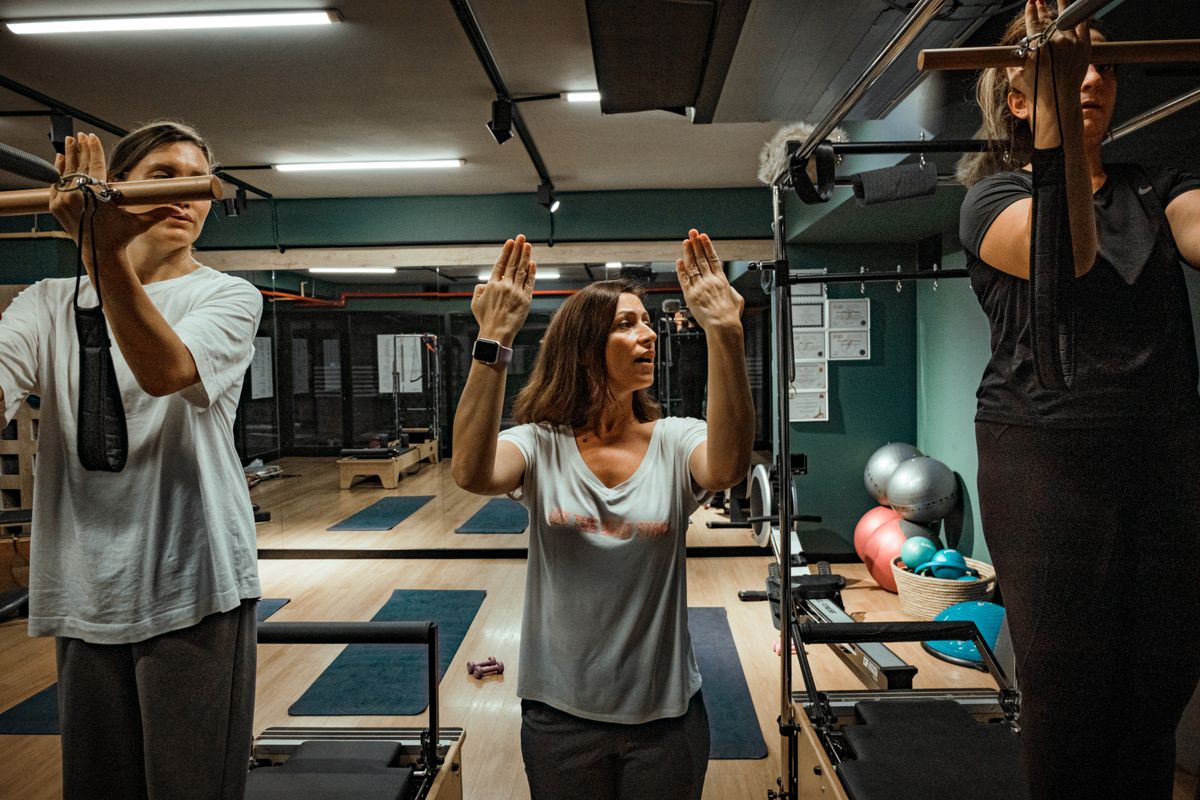
Image: Pexels (free license)
It's Sunday night, you're staring at a blank page, and tomorrow's class needs a plan. If sequencing feels overwhelming, the problem usually isn't that you don't know enough exercises. Most of us were taught which moves to teach, but never how to design the flow.
Good sequencing is about flow, not intensity
Here's the trap new instructors fall into: thinking a harder class is a better class. But the classes clients come back for aren't the most exhausting ones — they're the ones where the body opens up and fills in, with a flow that feels intentional. Sequencing is the craft of designing that flow.
The 5-step framework
Place these five phases in order and you have a skeleton that works for almost any client.
- Set the purpose. Decide what this class is for — posture, core strength, mobility, recovery. Without a purpose, a sequence is just a list of moves.
- Wake up awareness (prep). Start with breath and core activation. Skip this and compensation patterns creep into everything after.
- Build stability. Secure the pelvis and shoulders before adding load, so clients don't recruit the wrong muscles.
- Reach the peak. Place the main work for your purpose. Build up gradually instead of jumping to advanced moves, and minimize position changes (lying ↔ seated ↔ standing) so the flow doesn't break.
- Integrate and close. Finish with side-bending, spinal organization, and chest opening. The ending is what clients carry home.
Adapting by body type
Keep the same skeleton, shift the emphasis:
- Kyphosis (rounded back): a flexion pattern, so fill the peak with extension and chest-opening work to reverse it.
- Lordosis (anterior pelvic tilt): emphasize deep core and glute activation to bring the pelvis back to neutral.
- Flat back: restore the natural lumbar curve with targeted deep-core loading.
- Sway back: balance the posterior chain and integrate the core to re-stack the alignment.
Common mistakes
Skipping the prep, switching positions too often, and losing left–right or flexion–extension balance are the usual culprits. After you build a sequence, ask yourself one thing: can I explain why each exercise sits where it does? If a move can't be explained, it's better left out.
Want sequencing done in seconds?
PilaMate builds a safe, balanced sequence around this exact framework — just enter the client's body type, goal, and class length. Built for instructors, launching soon.
Join the waitlist